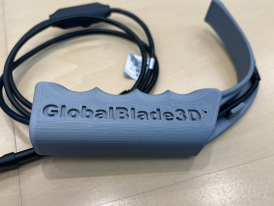

Global Blade 3D: Low-Cost Video Laryngoscope Innovation for Global Health
Global Blade 3D (www.GlobalBlade3D.com)
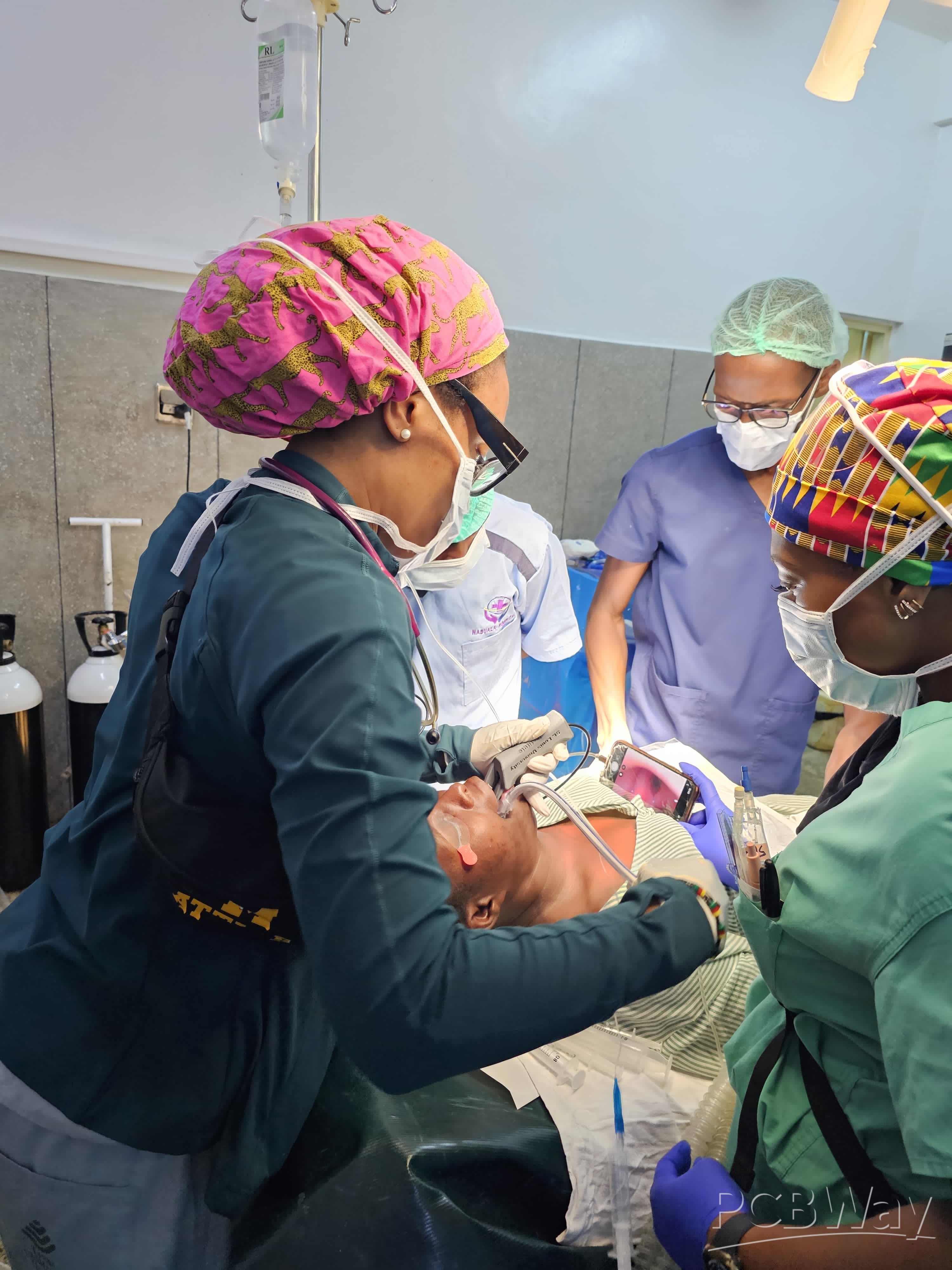
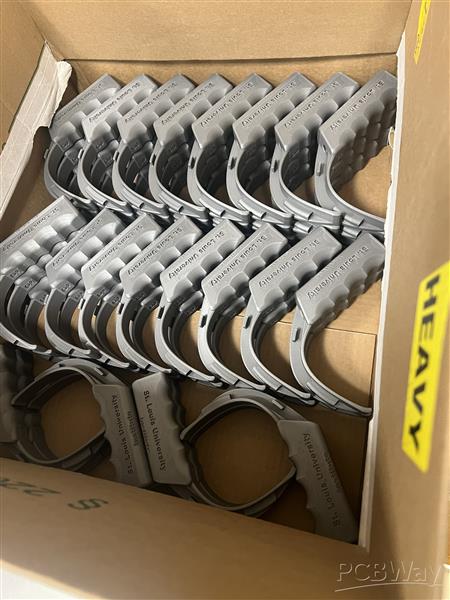
Founded in 2024, Global Blade 3D is a U.S.-based 501(c)(3) nonprofit corporation whose mission is to design, manufacture, and donate 3D-printed video laryngoscope systems and associated airway devices for global health and underserved populations. Our mission is to democratize access to life-saving airway technology. We have already deployed over 350 blades in Cameroon and are preparing for expanded distribution to partner sites in Uganda, Nepal, and Honduras. Our research team is conducting a rigorous simulation study comparing our device with commercial systems to evaluate performance, durability, ergonomics, and clinical feasibility.
About the Founders
Global Blade 3D was founded by Marc Petrykowski and Addison (AJ) Hustedde, two anesthesia clinicians and medical-device innovators passionate about improving global access to safe airway management. Marc brings a background in ICU nursing, biomedical design, 3D printing, and anesthesia research, while AJ also has a background in ICU nursing and contributes extensive operational planning, and technical design insight. Together, they combine clinical expertise with engineering-driven problem solving to create practical, low-cost solutions for resource-limited healthcare environments. Their shared vision is to bridge the gap between modern medical technology and communities that need it most.
Our mission & impact
We believe that safe airway management is a cornerstone of emergency care, surgical safety, and global health equity. Many low- and middle-income countries (LMICs) lack access to high-quality, affordable video laryngoscopes. Our solution: a modular design with 3D-printed components, low-cost optics, and intuitive controls, optimized for ease of manufacture and global distribution.
We are currently conducting a randomized crossover simulation study comparing our prototype against commercial systems (such as GlideScope® and McGrath®), analyzing metrics such as first-pass success rate, Cormack-Lehane grade, device setup time, ergonomics, and breakage/repair metrics. We have already deployed a pilot batch of 350 blades in Cameroon through our partner network, and we have requests from multiple LMIC partners in Philippines, Ghana, Uganda, Nepal, Honduras, Kenya, and many other countries for additional units.

Why PCBWay is the perfect fit
PCBWay offers a unique combination of rapid CNC machining, advanced fabrication materials, and high-quality electronics manufacturing. This is exactly what our project needs at this stage of development. As we refine our 3D-printed video laryngoscope system, we plan to prototype our blade housings and structural components using a variety of CNC materials offered by PCBWay to validate strength, durability, and biocompatibility profiles. This will allow us to compare aluminum, ABS-like resins, nylon composites, and other engineering-grade materials against our current 3D-printed models to determine the ideal path for future large-scale production.
Looking ahead, our team aims to design and manufacture a fully custom camera module for our device. PCBWay’s PCB fabrication, SMT assembly, and electronic component integration services make them an ideal long-term partner for developing the circuitry, sensor interfaces, illumination control boards, and embedded electronics for this next-generation system. By collaborating with PCBWay, we can accelerate both our mechanical testing and our future transition toward custom medical-grade electronics.
Project scope for sponsorship
Our current development phase focuses on transforming our proven 3D-printed prototype into a more durable, scalable, and clinically robust medical device. To do this responsibly, we plan to fabricate multiple prototype iterations using PCBWay’s CNC machining services across a variety of materials. Testing our blade, handle, and camera-housing components in aluminum, ABS-like resins, nylon composites, and other engineering-grade materials will allow us to evaluate structural integrity, heat tolerance, rigidity, and sterilization compatibility before we commit to expensive equipment or mass production tooling. This step is essential to ensuring we select the right material and design pathway for safe global deployment.
In parallel, we are laying the groundwork for the next evolution of our device: integrating a fully custom camera system. As we move toward developing our own optics and embedded electronics, PCBWay’s PCB fabrication and assembly capabilities will be instrumental in prototyping illumination driver boards, camera-interface circuitry, power management modules, and future data logging components. This combined mechanical and electronic prototyping pipeline enables us to validate both form and function while maintaining affordability for low-resource clinical settings.
By supporting this stage of the project, PCBWay would directly accelerate our ability to test, refine, and scale a life-saving airway device for global health applications.
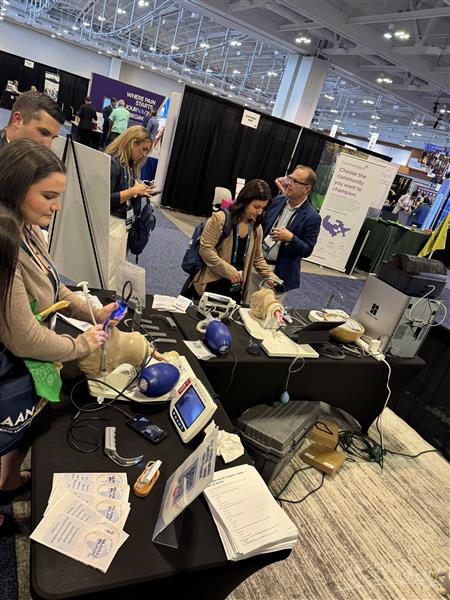
Community engagement & publicity – Create a dedicated “Global Blade 3D @PCBWay” campaign: blog posts, social-media features, YouTube walkthroughs, conference booth display (AANA, Global Health & Innovation Conference, etc.), providing PCBWay prominent brand visibility among makers, medical device engineers, global health funders and academic researchers.
Sponsorship benefits & visibility
A dedicated “Thank you PCBWay” banner and feature article on our website, shared across our social-media channels (Instagram ~52k+ interactions/month)
Inclusion in all project-related media (pilot site photos/videos, field-report publications, peer-reviewed articles) acknowledging PCBWay as a key manufacturing/partner sponsor.
Opportunity for PCBWay to receive a case-study on how rapid PCB/CNC prototyping enabled a medical-device project for low-resource settings, shareable as marketing content.
Specific request
We are seeking PCBWay’s support to accelerate our transition from early 3D-printed concepts to professionally machined, clinically viable prototypes. Specifically, we are requesting:
CNC-machined prototype components in a variety of materials (such as aluminum, ABS-like resins, nylon composites, and other engineering-grade options) so we can rigorously test blade strength, camera-housing durability, ergonomics, and sterilization compatibility before committing to high-cost production equipment.
Access to PCBWay’s engineering guidance regarding optimal material selection, tolerances, and manufacturability as our design matures toward long-term use in clinical environments.
Future partnership support for developing our next-generation custom camera system, including PCB fabrication, SMT assembly, and component sourcing for illumination drivers, camera-interface circuitry, and power-management modules.
These resources would allow us to refine our mechanical design, validate the best material pathway for global deployment, and begin laying the electronic foundation for a fully integrated, custom medical device.
Why this matters
By supporting Global Blade 3D, PCBWay will be enabling not just a hardware project, but a meaningful contribution to global healthcare. Each device we deploy saves lives by improving airway management in settings where every second counts. Your support helps bridge the technological divide and brings cutting-edge airway tools to communities that otherwise lack access. Together, we’ll demonstrate how makers, manufacturers and nonprofit mission-driven teams can collaborate to create high-impact medical-device solutions.
We are excited about the prospect of partnering with PCBWay and look forward to your positive decision. Please let us know if you need additional details (CAD drawings, BOM, board stack-up files, user-need data, IRB/CEA approvals) and we will gladly provide them.
- nonprofit medical innovation
- Innovation
- Global Blade 3D
- medical device prototyping
- video
- airway
- medical
- laryngoscope
- anesthesia
You might like







- Comments(0)
- Likes(1)
-
-
-
Marc Petrykowski
-